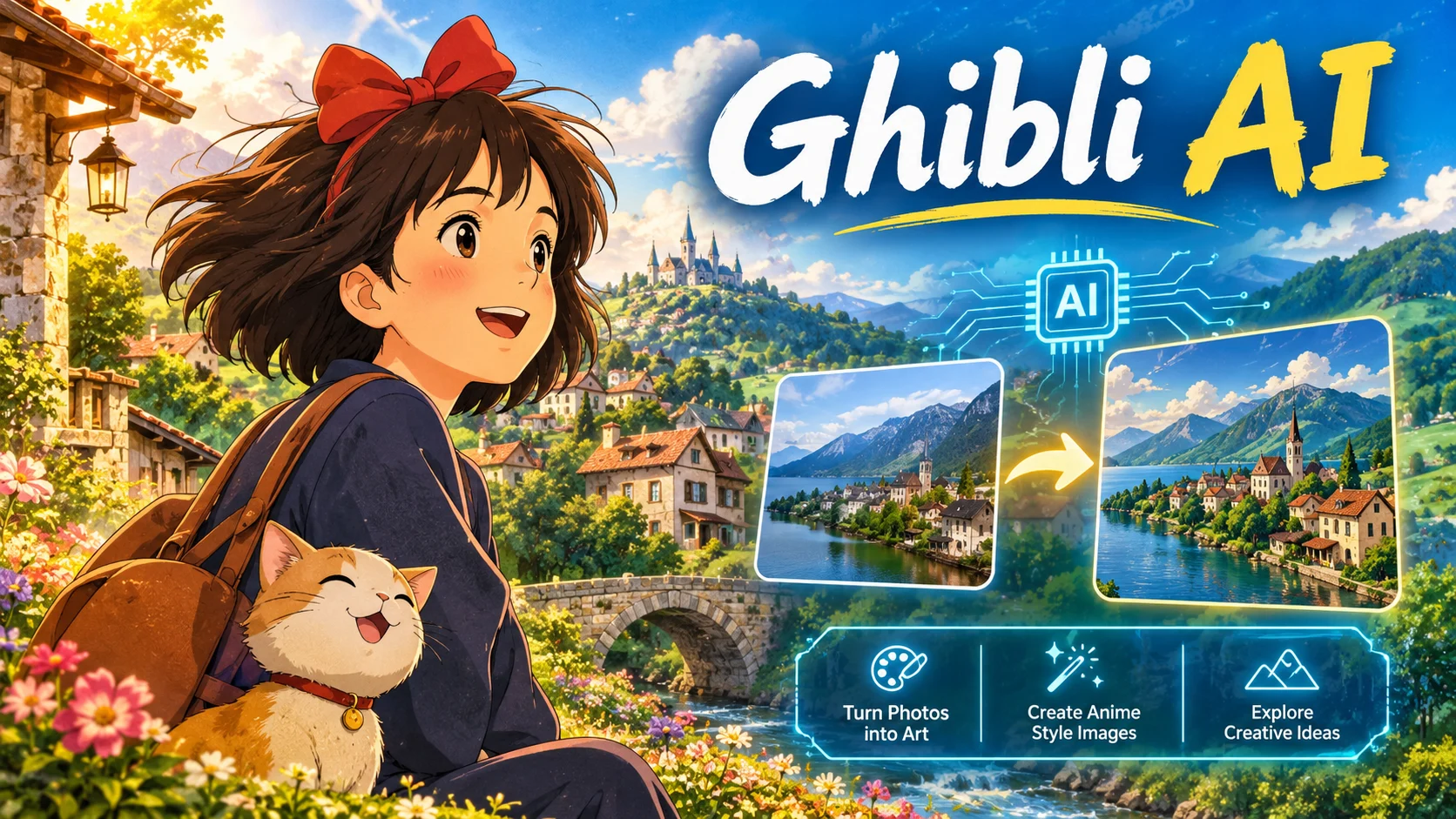
Quick Answer: Ghibli AI refers to artificial intelligence tools that generate or transform images into artwork inspired by Studio Ghibli’s recognizable animation aesthetics. Users can upload photographs or describe imaginative scenes to create colorful, hand-drawn anime-inspired visuals using AI image generators such as ChatGPT Images.
Ghibli AI at a glance
- What it does: Creates Ghibli-inspired anime artwork from photographs or text prompts.
- Popular use: Turning selfies, family photographs, pets, and landscapes into animated illustrations.
- Main technology: Generative AI and text-to-image or image-to-image models.
- Accessible tools: ChatGPT Images and other AI image-generation platforms.
- Pricing: Depends on the platform, subscription, and generation limits.
- Main concerns: Copyright, artistic originality, image privacy, and output consistency.
What Is Ghibli AI?
Ghibli AI is a popular term for AI-generated artwork that resembles the visual atmosphere associated with Studio Ghibli.
The term became widely recognized in March 2025. ChatGPT’s image-generation capabilities helped popularize a trend in which users transformed ordinary photographs into colorful anime-style illustrations.
The resulting images often feature:
- Soft watercolor-like backgrounds.
- Warm sunlight and atmospheric lighting.
- Expressive anime-inspired characters.
- Detailed natural environments.
- Whimsical architecture and landscapes.
- Gentle colors and nostalgic visual moods.
These characteristics help create an aesthetic associated with animated fantasy films such as My Neighbor Totoro and Spirited Away.
However, Ghibli AI is not one specific artificial intelligence model. It is a broad search term covering different image generators, editing tools, and prompting techniques.
Important distinction: Ghibli-inspired AI artwork does not automatically come from Studio Ghibli. Most online generators are independent services, and their names or outputs should not imply official studio endorsement.
Why Did Ghibli AI Become So Popular?
The popularity of Ghibli AI came from a simple idea: people could see familiar photographs transformed into animated scenes.
A regular selfie could become an anime character. A photograph of a pet could become a magical forest illustration. Even ordinary street photographs could acquire a cinematic animated appearance.
Several factors contributed to the trend.
1. Personal photographs became creative artwork
People enjoy seeing familiar moments presented differently. Ghibli-inspired image generation made this transformation accessible without requiring professional drawing skills.
2. Social media encouraged participation
Users shared their generated images across Instagram, Facebook, TikTok, and other platforms. The recognizable visual style made the results easy to identify and discuss.
3. Image generation became easier
Traditional digital illustration requires drawing skills and specialized software. Modern generative AI tools allow users to describe a desired result in ordinary language.
4. Nostalgia increased interest
Studio Ghibli films have a distinctive emotional atmosphere. Their imaginative environments, expressive characters, and natural scenery appeal to audiences worldwide.
The AI trend brought these visual characteristics into personal photographs and everyday creative projects.
How Does Ghibli AI Work?
Ghibli AI relies on generative artificial intelligence, particularly image-generation models trained to recognize relationships between visual elements.
These models learn patterns involving colors, shapes, lighting, textures, objects, and artistic compositions.
When someone enters a prompt, the model interprets the instructions and generates an image matching the requested characteristics.
There are two common approaches.
1. Text-to-image generation
Text-to-image technology creates artwork from written descriptions.
For example, someone might enter:
An imaginary countryside village surrounded by green mountains, colorful flowers, a peaceful river, soft watercolor textures, and warm golden sunlight.
The AI interprets these details and creates an original illustration.
2. Image-to-image transformation
Image-to-image generation modifies an existing photograph.
Users upload a selfie, landscape, pet photograph, or other image. They then describe the desired artistic transformation.
The AI attempts to preserve important elements while changing the visual presentation.
For example, it might transform a photograph of a family into an animated illustration while retaining recognizable facial features and the original composition.
What Makes the Ghibli-Inspired Appearance Different?
The visual appearance usually comes from combining several artistic characteristics rather than applying one simple filter.
| Visual element | Typical appearance |
|---|---|
| Color palette | Warm greens, soft blues, pastel colors |
| Lighting | Golden sunlight and gentle shadows |
| Characters | Expressive faces and simplified features |
| Backgrounds | Detailed forests, villages, and landscapes |
| Textures | Painterly surfaces and watercolor-like effects |
| Atmosphere | Nostalgic, peaceful, and imaginative |
The model combines these elements to produce an animated appearance.
However, results depend on the image generator, reference photograph, and prompt quality.
How to Create Ghibli AI Images
You do not need professional illustration skills to create anime-inspired artwork. Most modern image generators accept ordinary written instructions.
Here is a practical process.
Step 1: Choose an AI image generator
Start with a platform that supports image generation or photo editing.
Some options include:
- ChatGPT Images
- Google Gemini
- Adobe Firefly
- Canva AI image tools
Each platform has different capabilities, usage limits, and commercial-use conditions.
Step 2: Upload your photograph
If you want to transform an existing photograph, upload a clear image.
For better results, choose a photograph with:
- Good lighting.
- Clearly visible subjects.
- Minimal background clutter.
- Recognizable facial features.
- Sufficient image resolution.
You can also skip the upload and create an entirely fictional scene.
Step 3: Write a descriptive prompt
Prompt quality has a major influence on the generated result.
Instead of writing only “make this Ghibli,” describe the visual characteristics you want.
Include details about the characters, environment, colors, lighting, and composition.
Step 4: Generate the image
Submit your instructions and allow the image generator to process them.
The first result might not match your expectations. Review the image before making further changes.
Step 5: Refine the result
Use additional instructions to correct specific details.
For example:
- Make the background more detailed.
- Preserve the original person’s facial features.
- Add warmer afternoon lighting.
- Make the colors softer and more natural.
- Improve the character’s proportions.
- Remove unwanted objects from the background.
Small adjustments often produce better results than rewriting the entire prompt.
Best Ghibli AI Prompts to Try
A good prompt should describe the desired artwork rather than rely on a single keyword.
The following examples use general animation and illustration characteristics to help create original artwork.
1. Ghibli-Inspired Portrait Prompt
Prompt:
Transform the uploaded photograph into a beautiful hand-painted anime illustration. Preserve the person’s recognizable facial features, hairstyle, expression, and clothing. Use soft watercolor textures, warm natural lighting, expressive eyes, gentle pastel colors, and a detailed artistic background. Create a peaceful, nostalgic animated-film atmosphere.
2. Magical Forest Prompt
Prompt:
Create a magical countryside forest with enormous ancient trees, tiny wildflowers, a flowing river, and sunlight passing through green leaves. Use detailed hand-painted backgrounds, soft watercolor textures, atmospheric lighting, and imaginative animated fantasy aesthetics.
Copy prompt
3. Pet Transformation Prompt
Prompt:
Transform my pet photograph into a charming hand-drawn anime illustration. Preserve the animal’s original appearance, fur colors, markings, and expression. Add a beautiful garden with colorful flowers, soft sunlight, painterly textures, and a dreamy fantasy atmosphere.
Copy prompt
4. Anime Landscape Prompt
Prompt:
Create a peaceful Japanese countryside landscape with traditional houses, distant mountains, green rice fields, and a small railway. Use hand-painted animation backgrounds, rich natural scenery, soft pastel colors, beautiful clouds, and cinematic golden-hour lighting.
Copy prompt
5. Fantasy Character Prompt
Prompt:
Create an original animated fantasy character standing in a mysterious enchanted village. Give the character expressive eyes, natural proportions, distinctive clothing, and a gentle personality. Include imaginative architecture, lush greenery, soft atmospheric lighting, and detailed hand-painted scenery.
Prompt-writing tip: Specify what must remain unchanged when transforming a real photograph. This helps reduce unwanted changes to faces, clothing, and important objects.
Best Ghibli AI Generators and Alternatives
There is no single official Ghibli AI generator. Several independent platforms can create similar anime-inspired illustrations.
The right choice depends on whether you want to transform photographs, generate original artwork, or create designs for commercial projects.
ChatGPT New Features 2026: What’s Changed & What’s New
1. ChatGPT Images
ChatGPT Images supports text-based image generation and editing of uploaded photographs. It is suitable for users who want to refine an image through conversational instructions.
- Target user: Beginners and general creators.
- Strength: Conversational editing and reference-photo transformations.
- Pricing: Included access varies by plan and usage limits.
- Limitation: Generation availability and usage limits depend on the account.
- Official image-generation guide
2. Google Gemini
Gemini offers image generation and editing through its Nano Banana models. Users can upload images, request transformations, and make targeted adjustments.
- Target user: Everyday users and creative enthusiasts.
- Strength: Reference-image editing and character consistency.
- Pricing: Free access and paid-plan capabilities vary.
- Limitation: Availability and daily quotas depend on account and region.
- Official Gemini image guide
3. Adobe Firefly
Adobe Firefly provides generative image tools for creative workflows. It can help users create illustrations, visual assets, and design concepts.
- Target user: Designers and professional creators.
- Strength: Integration with Adobe’s creative ecosystem.
- Pricing: Subscription and generative-credit options.
- Limitation: Features and credit allowances vary by plan.
- Adobe generative-credit information
4. Canva
Canva combines design tools with AI-assisted creative features. Users can incorporate generated artwork into social media posts, presentations, posters, and other designs.
- Target user: Content creators, students, and marketers.
- Strength: Image creation combined with graphic design.
- Pricing: Free and paid plans.
- Limitation: AI access and usage allowances vary.
- Official Canva pricing
Ghibli AI Platform Comparison
| Platform | Main strength | Pricing transparency | Main limitation |
|---|---|---|---|
| ChatGPT Images | Photo transformation | Plan-dependent | Usage limits |
| Gemini | Image editing | Plan-dependent | Regional availability |
| Adobe Firefly | Creative workflows | Credit-based options | Credit consumption |
| Canva | Social designs | Free and paid plans | Feature restrictions |
These platforms are not identical products. They offer different image-generation and editing workflows, so compare them using the same reference photograph and prompt.
Is Ghibli AI Free to Use?
Some AI image generators offer free access, while others require subscriptions or use credit-based payment systems.
However, there is no universal Ghibli AI subscription or standard price. The cost depends on the particular website or application.
Understanding free and paid access
| Access type | What to expect |
|---|---|
| Free generators | Limited image generations or basic features |
| Freemium tools | Free access with optional upgrades |
| Monthly subscriptions | Recurring payments and monthly allowances |
| Credit-based tools | Payment based on image-generation credits |
| Professional plans | Additional creative features and higher allowances |
For example, ChatGPT Images is available across ChatGPT tiers, although usage limits vary. OpenAI Help Center+1
Independent websites also advertise their own Ghibli AI services and subscriptions. Their prices, credit allowances, and renewal conditions should be checked individually.
What should you check before paying?
Do not choose a generator based only on its advertised price.
Check these details first:
- Monthly credits: How many images can you actually generate?
- Credit expiry: Do unused credits carry over?
- Download restrictions: Are full-resolution downloads included?
- Watermarks: Does the free version add branding?
- Commercial rights: Can you use generated images in paid projects?
- Subscription renewal: Does the service renew automatically?
- Refund policy: What happens when generation fails?
A low-cost subscription may become expensive when every additional image requires credits.
Main Uses of Ghibli AI
Ghibli-inspired AI artwork has applications beyond social media trends. People can use these illustrations for personal creativity, digital storytelling, and visual communication.
1. Social media profile pictures
Transform ordinary portraits into colorful illustrated avatars for social media profiles and personal branding.
2. Travel memories
Convert vacation photographs into illustrated landscapes and personalized digital souvenirs.
3. Pet portraits
Create artistic illustrations of cats, dogs, and other pets while preserving their recognizable features.
4. Digital storytelling
Develop visual concepts for fictional characters, fantasy settings, and personal storytelling projects.
5. Personalized gifts
Create illustrated greeting cards, posters, wallpapers, and digital artwork for special occasions.
Businesses can also explore animated-style illustrations for marketing concepts. However, commercial use requires careful attention to the generator’s licensing terms and applicable copyright laws.
Ghibli AI Copyright and Ethical Concerns
The popularity of Ghibli AI has created an important discussion about copyright, artistic ownership, and the relationship between technology and human creativity.
The central question is straightforward: Can an AI generator imitate a recognizable animation aesthetic without violating intellectual property rights?
The answer is more complicated than a simple yes or no.
Does Studio Ghibli own its artistic style?
Copyright generally protects specific creative expressions rather than broad artistic ideas, techniques, or styles.
This distinction matters.
For example, requesting a soft watercolor illustration with expressive characters is different from reproducing a specific copyrighted character, animation frame, or recognizable scene.
The European Innovation Council and SMEs Executive Agency discussed this distinction in its April 2025 analysis of the Ghibli AI trend. It also highlighted unresolved questions surrounding AI training and copyrighted creative works. IP Helpdesk+1
However, copyright rules differ between countries. An output that imitates a general visual aesthetic may raise different legal questions from one that reproduces protected characters or specific artwork.
Did Hayao Miyazaki oppose AI-generated art?
Hayao Miyazaki previously expressed strong criticism of AI-generated animation.
In a 2016 documentary, he reacted negatively to an AI animation demonstration. His comments later circulated widely during the 2025 Ghibli AI trend.
However, his earlier comments should not automatically be presented as a direct response to the 2025 trend. Studio Ghibli did not provide a direct public response to that viral wave in the contemporary reporting. AP News+1
Is creating Ghibli AI artwork illegal?
Not automatically.
Creating an image with a general anime-inspired or watercolor aesthetic does not necessarily constitute copyright infringement.
Nevertheless, potential legal problems can arise when generated artwork:
- Reproduces recognizable copyrighted characters.
- Copies specific scenes from animated films.
- Recreates protected artwork with substantial similarities.
- Uses copyrighted reference photographs without appropriate permission.
- Violates a platform’s commercial-use or licensing conditions.
For safer creative work, use original characters, independently developed compositions, and photographs you have permission to use.
The legal position remains jurisdiction-dependent and continues to develop.
Privacy and Security: What Happens to Uploaded Photos?
Photo transformation involves sharing personal visual information with an AI platform.
This deserves attention, especially when uploading photographs of family members, children, or other people.
Before using a Ghibli AI generator, review its privacy policy.
Important questions include:
- Does the platform store uploaded photographs?
- Can employees or service providers access submitted images?
- Are photographs used to improve AI models?
- How long are generated images retained?
- Can users delete uploaded content and generation history?
- Does the platform share information with third parties?
Do not assume every AI image generator follows the same privacy practices.
For example, OpenAI explains that its image tools support uploading and editing photographs. Its image-input documentation also directs users to the applicable data-use settings and policies. OpenAI Help Center+1
A practical precaution: Avoid uploading confidential documents, identification cards, private family photographs, or sensitive images to unfamiliar Ghibli AI websites.
Also, check the actual website address before creating an account or entering payment information. A service using the words “Ghibli AI” is not automatically affiliated with Studio Ghibli.
Common Mistakes When Using Ghibli AI
Even capable image generators can produce disappointing results when prompts lack sufficient detail.
Here are some common mistakes and ways to avoid them.
| Common mistake | Better approach |
|---|---|
| Writing only “make it Ghibli” | Describe colors, lighting, textures, and composition |
| Uploading blurry photographs | Use clear, well-lit reference images |
| Ignoring facial details | Explicitly request preservation of recognizable features |
| Adding too many instructions | Prioritize the most important visual requirements |
| Expecting perfect results immediately | Refine the output through follow-up edits |
| Using copyrighted characters commercially | Develop original characters and check licensing terms |
| Choosing unknown websites | Verify ownership, privacy policies, and payment terms |
Another frequent problem is expecting every image generator to produce identical results.
Different models interpret instructions differently. One might preserve facial details more effectively, while another might produce more imaginative backgrounds.
Therefore, testing the same prompt across platforms can help identify which workflow suits your project.
Who Should Use Ghibli AI?
Ghibli-inspired image generation is particularly relevant to people who enjoy visual creativity without wanting to learn professional illustration software.
| Audience | Potential benefit |
|---|---|
| Casual users | Transform personal photographs |
| Anime enthusiasts | Explore original animated artwork |
| Social media creators | Develop profile pictures and visual posts |
| Digital artists | Experiment with compositions and concepts |
| Students | Create illustrations for personal projects |
| Marketers | Develop creative visual concepts |
However, professional illustrators and businesses should evaluate licensing, image quality, consistency, and originality before relying on AI-generated artwork.
The technology can support creative work, but it does not replace every aspect of human artistic judgment.
Frequently Asked Questions About Ghibli AI
1. What is the best AI tool for creating Ghibli-style images?
ChatGPT Images and Google Gemini are accessible options for creating anime-inspired artwork. Adobe Firefly and Canva also provide creative image-generation workflows. The right choice depends on image quality, editing capabilities, pricing, and licensing requirements.
2. Can I turn my photo into a Ghibli-style image for free?
Yes. Some AI image generators offer free image-generation access or limited free usage. However, available generations, image quality, and editing features depend on the platform and account limits.
3. Is Ghibli AI officially associated with Studio Ghibli?
No. The term Ghibli AI generally describes independent AI image-generation tools and a popular artistic trend. It does not represent an official Studio Ghibli product or automatically indicate studio endorsement.
4. Can I use Ghibli AI images commercially?
It depends on the platform’s licensing terms, the generated image, and applicable copyright laws. General stylistic inspiration is different from reproducing protected characters or specific copyrighted artwork. Always check commercial-use permissions before publishing or selling generated images.
5. Why do my Ghibli AI images look different from the original photograph?
AI generators interpret photographs rather than simply applying a traditional filter. They may change facial features, clothing, backgrounds, and proportions. Uploading a clear reference photograph and explicitly requesting preservation of important details can improve consistency.
Conclusion
Ghibli AI has made animated-style image creation accessible to everyday users. It allows people to transform photographs, explore imaginative environments, and experiment with different artistic aesthetics through simple text prompts.
Tools such as ChatGPT Images, Gemini, Adobe Firefly, and Canva offer different approaches to this creative process.